
 by rehannmarine
 Introduction
When it comes to industrial and marine safety, selecting the right workwear is essential. Many people often confuse a boiler suit vs coverall, assuming they are the same. However, these garments serve different purposes depending on the work environment.
Understanding the difference between a boiler suit vs coverall helps workers choose the right protective clothing for safety, comfort, and efficiency. In this guide, we’ll explain their features, uses, and help you decide which option is best for your needs in marine and industrial sectors.
What is a Boiler Suit?
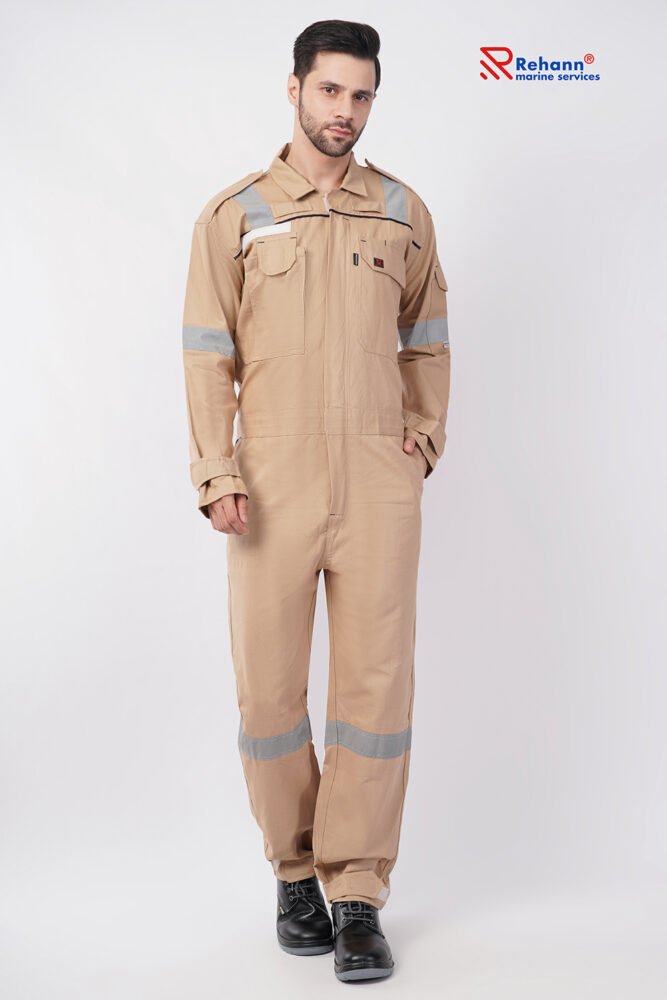
A boiler suit is a one-piece protective garment designed for heavy-duty and hazardous environments. It offers full-body protection and is commonly used in marine, offshore, and industrial settings.
Key Features of Boiler Suits:
- Made from thick, durable fabric
- Resistant to oil, grease, and chemicals
- Provides high-level protection
- Designed for tough working conditions
- Often includes reflective strips for visibility
Common Uses:
- Ship engine rooms
- Offshore oil rigs
- Heavy industrial operations
- Dockyard maintenance
Boiler suits are ideal when safety and durability are top priorities.
What is a Coverall?
A coverall is also a one-piece garment but is generally lighter and more comfortable than a boiler suit. It is designed for less hazardous environments where basic protection is sufficient.
Key Features of Coveralls:
- Lightweight and breathable fabric
- Comfortable for long working hours
- Easy to wear and remove
- Provides basic protection from dust and dirt
Common Uses:
- Manufacturing units
- Maintenance and repair work
- Workshops and light industrial jobs
Coveralls are best suited for tasks that do not involve extreme hazards.

Boiler Suit vs Coverall – Key Differences
Understanding the boiler suit vs coverall comparison helps in making the right choice.
| Feature | Boiler Suit | Coverall |
|---|---|---|
| Protection Level | High | Moderate |
| Fabric | Thick & heavy-duty | Lightweight |
| Usage | Marine, offshore, heavy industry | General industrial work |
| Resistance | Oil, heat, chemicals | Dust and minor exposure |
| Durability | Very high | Moderate |
| Comfort | Moderate | High |
This table clearly shows how both garments differ in terms of protection and usage.
When to Use a Boiler Suit vs Coverall
Choosing between a boiler suit vs coverall depends on your work environment:
Use a Boiler Suit When:
- Working in marine or offshore conditions
- Exposure to oil, chemicals, or heat
- Heavy-duty industrial tasks
- High safety requirements
Use a Coverall When:
- Performing light industrial work
- Working in clean environments
- Comfort is a priority
- Minimal exposure to hazards
Always match your workwear with the level of risk involved.
Materials Used in Boiler Suits and Coveralls
The material plays a crucial role in performance and safety.
Common Materials:
- Cotton: Breathable and comfortable
- Poly-Cotton: Durable and cost-effective
- Flame-Resistant Fabric: Ideal for high-risk environments
- Waterproof Materials: Used in marine and offshore work
For marine environments, flame-resistant and heavy-duty fabrics are highly recommended.
Which is Better for Marine Workers?
In marine environments, a boiler suit is generally the better choice.
Why Boiler Suits are Preferred:
- Protect against oil, grease, and chemicals
- Durable for rough and wet conditions
- Suitable for engine rooms and deck work
- Provides better overall safety
While coveralls can be used for light-duty tasks, they are not ideal for high-risk marine conditions.
Safety Standards for Workwear
Choosing certified workwear ensures maximum protection.
Important Standards to Consider:
- ISO safety standards
- Flame-resistant certifications
- Industrial safety guidelines
Always ensure your workwear meets required safety standards for your industry.
Common Mistakes to Avoid
When selecting between a boiler suit vs coverall, avoid these mistakes:
- Choosing lightweight coveralls for hazardous work
- Ignoring safety certifications
- Prioritizing cost over quality
- Not considering environmental conditions
The wrong choice can compromise worker safety.
How to Choose the Right Workwear
To select the right option:
- Assess your work environment
- Identify potential hazards
- Choose appropriate fabric
- Ensure proper fit and comfort
- Check safety certifications
A well-informed decision improves both safety and productivity.
To Understant this in detail, read our latest article – How to choose boiler suit for your industry
Buy Boiler Suits & Coveralls in India (Bulk Supply Available)
If you are looking for reliable workwear, choosing the right supplier is equally important.
Rehann Marine Services offers:
- High-quality marine boiler suits
- Durable industrial coveralls
- Safety workwear for ships and offshore
- Bulk supply at competitive prices
- Fast delivery across India
You can source high-quality marine PPE from trusted platforms:
- Visit our profile on IndiaMART
- Connect with us on Go4WorldBusiness
How to Choose a Boiler Suit: A Comprehensive Guide
[…] Boiler suits are often confused with coveralls in industrial usage. However, there are key differences in design and application. You can read the full comparison here:Boiler Suit vs Coverall: What’s the Difference? (2026 Guide)https://rehannmarine.com/boiler-suit-vs-coverall/ […]
April 30, 2026Marine PPE in India: Complete Safety Guide for Ship Workers (2026)
[…] Workers also need proper clothing like boiler suits and body protection. Link -> Boiler Suit vs Coverall […]
May 1, 2026Where to Buy Marine Safety Equipment in India (2026 Guide)
[…] Link to: Boiler Suit vs Coverall […]
May 2, 2026Industrial Safety Equipment Supplier in Mumbai
[…] Learn more: Boiler Suit vs Coverall – What’s the Difference? […]
May 4, 2026Industrial Safety Equipment Supplier in Navi Mumbai – Complete 2026 Guide
[…] Learn more: Boiler Suit vs Coverall – What’s the Difference? […]
May 4, 2026